Evolution
C3 has evolved over more than four decades of international business, finance, technology and project development. The industries, regions and scale of the opportunities have changed, but the underlying role has remained remarkably consistent: bringing together the people, organizations, knowledge, technology and capital required to move complex international opportunities forward.
Building Connections Across the Pacific
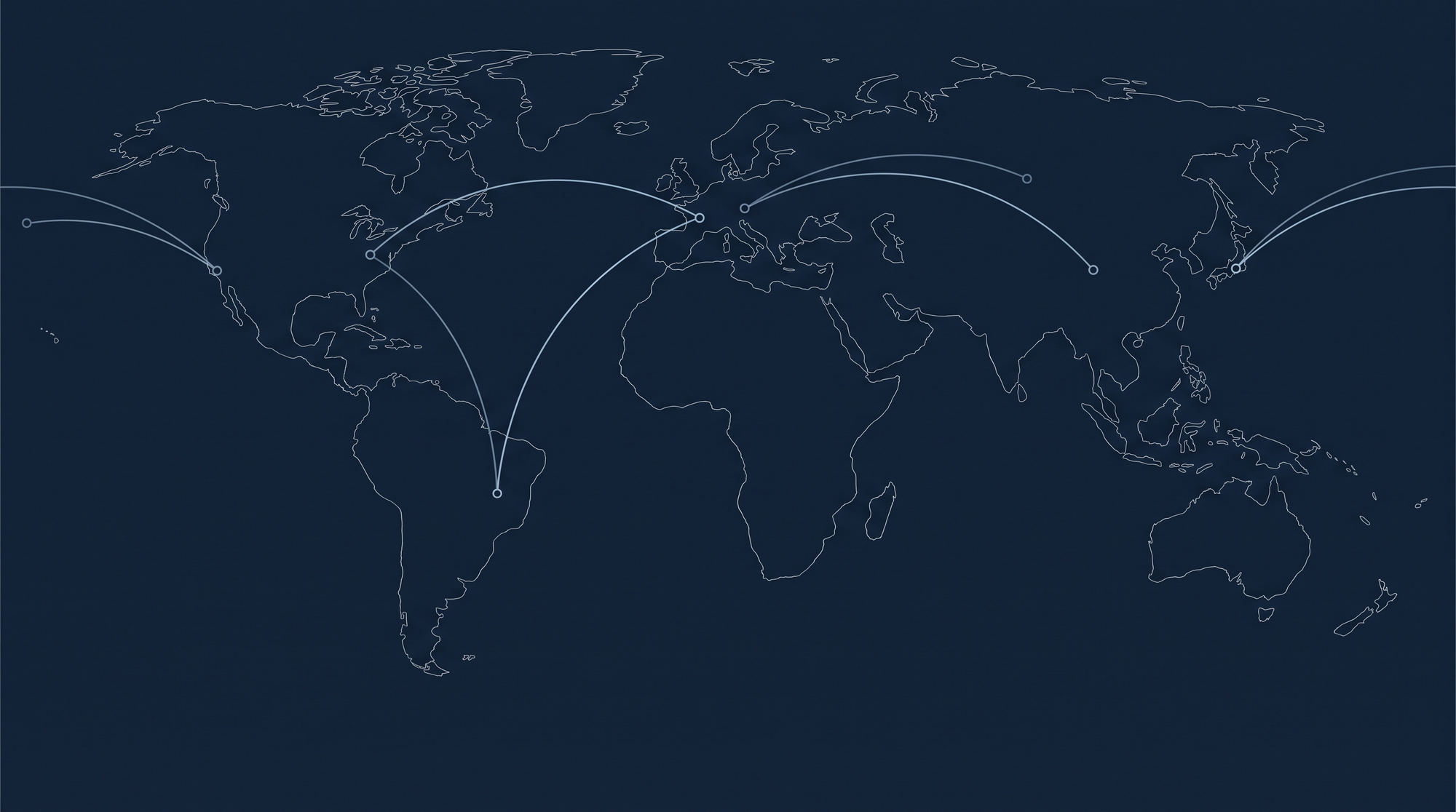
The foundations of C3 began in 1980, when founder Jeff Don established an international legal practice focused on what was then commonly called Pacific Rim business. His work increasingly involved transactions and ventures in which success depended upon more than conventional legal or financial expertise. Companies operating across borders needed to understand unfamiliar markets, institutions and business cultures and, equally important, needed access to the right people and organizations within them.
That experience expanded through East and Southeast Asia into corporate restructuring, international finance, technology, telecommunications and market development. By the 1990s, Don was working at the intersection of Western companies seeking opportunities in Asia and Asian organizations seeking technology, capital and commercial relationships in the West.
From Advisor to International Connector
The early C3 organization provided consulting, strategic market research and educational services, but its role extended considerably beyond conventional consulting. C3 became an interface among companies, governments, institutions and business leaders operating across different countries and cultures.
C3 organized international conferences, executive programs and trade delegations that brought participants across borders to meet decision-makers, evaluate technologies and opportunities, visit operating facilities and establish commercial relationships. Its work increasingly centered on creating the connections through which opportunities could develop.
The principle eventually became known within C3 as BEWE, Best of East and West: identify complementary capabilities from different parts of the world and bring them together around a common commercial or development objective.

From Connections to Projects
As C3’s work evolved, simply making the right connections was no longer enough. Larger opportunities required a disciplined means of determining whether a project was viable, identifying what was missing and assembling the technical, financial, commercial and institutional capabilities required to advance it.
In 2016, C3 formalized elements of this approach through its Project Development Advisory Committee, PDAC. The process brought together expertise in marketing, finance, operations and technology to screen opportunities, obtain additional information, work with outside technical and EPC organizations, negotiate terms of engagement and establish responsibility for project deliverables.
This represented an important evolution in C3’s role. The organization was moving from connecting participants around an opportunity toward actively integrating the components necessary to define and develop the project itself.
Infrastructure Development in the Americas
That evolution became increasingly important as C3 expanded its activities in the Americas and became involved with larger infrastructure and development opportunities.
Transportation, energy, waste management, water and wastewater, digital infrastructure and related projects require more than a technology or an engineering solution. They require alignment among governments, local institutions, developers, technical specialists, financing sources, technology providers and the communities and economies the infrastructure is intended to serve.
C3’s earlier experience working across countries, institutions and business cultures became the foundation for a broader project-development role: creating the structure through which those different participants can work toward a common objective.
C3 Today
Today, C3 brings that accumulated experience into an integrated approach to international infrastructure development.
The tools have become considerably more sophisticated. C3’s project-development methodology now provides a structured progression for gathering and organizing information, evaluating opportunities, developing strategic concepts, defining technical and business solutions and advancing viable projects toward implementation. Human expertise is increasingly supported by AI-enabled analytical capabilities that allow information to be examined, tested and refined at a scale that was not previously practical.
More than four decades after that work began, C3 continues to serve as the point of integration among local knowledge, international expertise, technology, capital and institutional relationships, developing the connections that make infrastructure possible.
C3 began by building connections across borders. It evolved into building the structure around those connections that allows complex projects to move forward.
Start a conversation.
C3 International welcomes conversations with governments, project owners, investors, developers, technology companies and other organizations interested in developing significant infrastructure opportunities.